

 Introduction:
 Introduction:
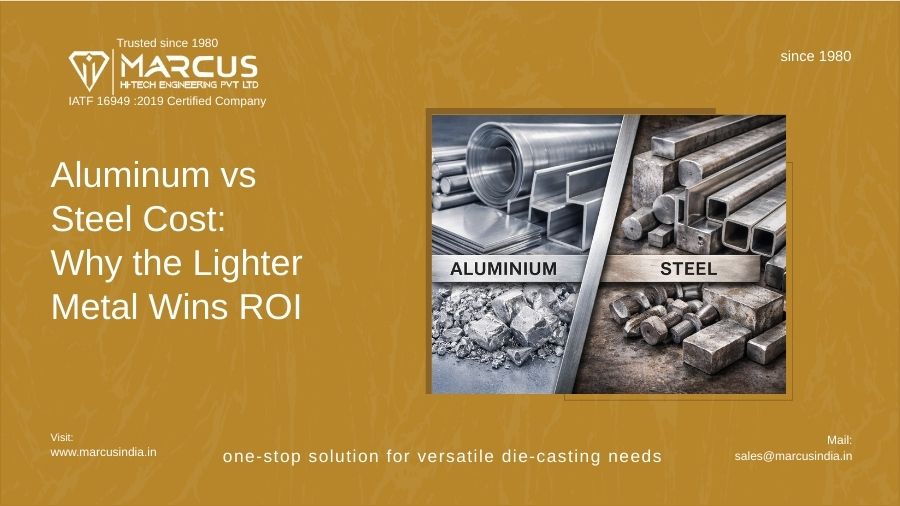
In the world of high-precision manufacturing, the debate over material selection usually starts with a single question: “How much will it cost?” On the surface, the answer seems simple—raw steel is typically cheaper per kilogram than aluminum. However, for modern OEMs in the automotive, EV, and industrial sectors, the “sticker price” of raw metal is a trap. To truly understand the aluminum vs steel cost debate, you have to look at the Total Cost of Ownership (TCO).
1. The Raw Material Reality
It’s no secret that aluminum carries a higher upfront cost. On average, primary aluminum can be 2–3 times more expensive than carbon steel by weight. But here is the secret that veteran engineers at Marcus Hi-Tech use to save clients millions: You don’t buy metal by the kilogram; you buy it by the part.
Because aluminum is roughly one-third the density of steel, you need significantly less mass to produce the same component. This density advantage is the first step in offsetting the initial price gap.
2. The Hidden Savings in “Foundry-to-Finished” Manufacturing
The true cost-efficiency of aluminum shines during the production phase. When you partner with an integrated aluminum foundry like Marcus, the aluminum vs steel cost equation shifts in your favor due to:
- Near-Net-Shape Precision: Aluminum die casting allows for complex, thin-walled geometries that are impossible or too expensive to achieve with steel fabrication.
- Lower Energy Consumption: Aluminum melts at ~660°C, while steel requires ~1500°C. This lower “thermal footprint” translates to faster cycle times and lower energy costs.
- Machinability: Aluminum is “softer” on tools. You can run CNC machines at higher speeds with less tool wear, cutting labor and maintenance costs by up to 40%.
3. Aluminum vs. Steel: A Comparative Cost & Performance Analysis
Feature | Aluminum (Casting) | Steel (Fabrication) | The Cost Impact |
Raw Material | Higher ($/kg) | Lower ($/kg) | Initial investment is higher for Al. |
Weight | ~2.7 g/cm³ | ~7.8 g/cm³ | Al saves 65% in logistics & payload. |
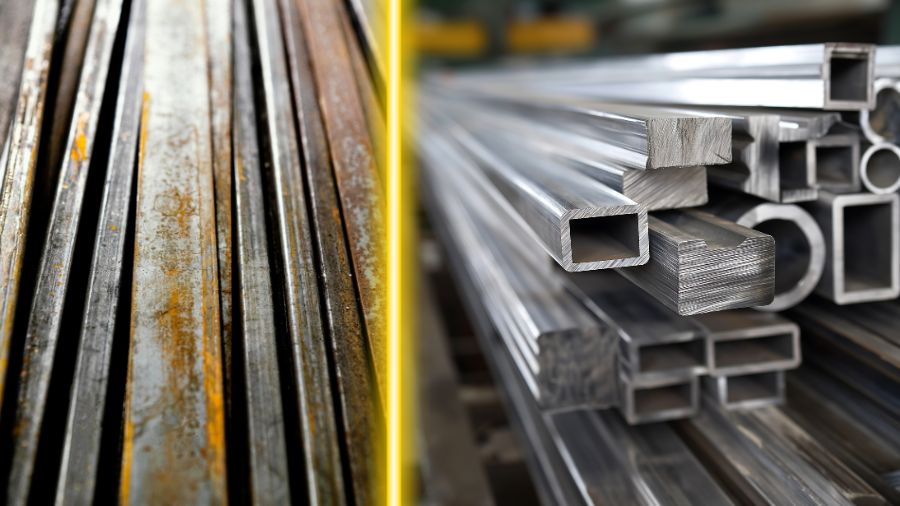
Corrosion | Natural Oxide Layer | Prone to Rust | Al removes the need for costly coatings. |
Tooling Life | High (for Zinc/Al) | Moderate | Al die casting allows for 100k+ shots. |
Complexity | High (Integrated parts) | Low (Requires welding) | Al reduces assembly labor costs. |
4. Why EV Manufacturers are Leading the Switch
For the Electric Vehicle (EV) industry, the aluminum vs steel cost debate is already settled. Every kilogram of weight saved in the chassis or motor housing directly extends battery range. Reducing vehicle mass allows OEMs to use smaller, cheaper batteries—often saving more money on the battery pack than the entire cost of the aluminum transition.
5. The Conclusion: Is the Switch Right for You?
While steel remains the king of heavy-duty structural stability (like bridge beams), aluminum is the clear winner for precision, mobility, and high-volume ROI. If your project requires:
- Lower shipping and logistics costs.
- Reduced assembly time through part consolidation.
- Zero-maintenance corrosion resistance.
…then the “higher” cost of aluminum is actually your biggest saving.
Ready to crunch the numbers?
At Marcus Hi-Tech Engineering, we don’t just pour metal; we optimize your bottom line. Contact our engineering team today for a comprehensive Cost-Benefit Analysis comparing your current steel designs to our high-precision aluminum casting solutions.